How Technology Innovation Changed Everything: From Walkmans to AI
Without doubt, technology has really changed the world since the 1980s. I am not so sure whether it has made us lazier or better. Perhaps a little of both.
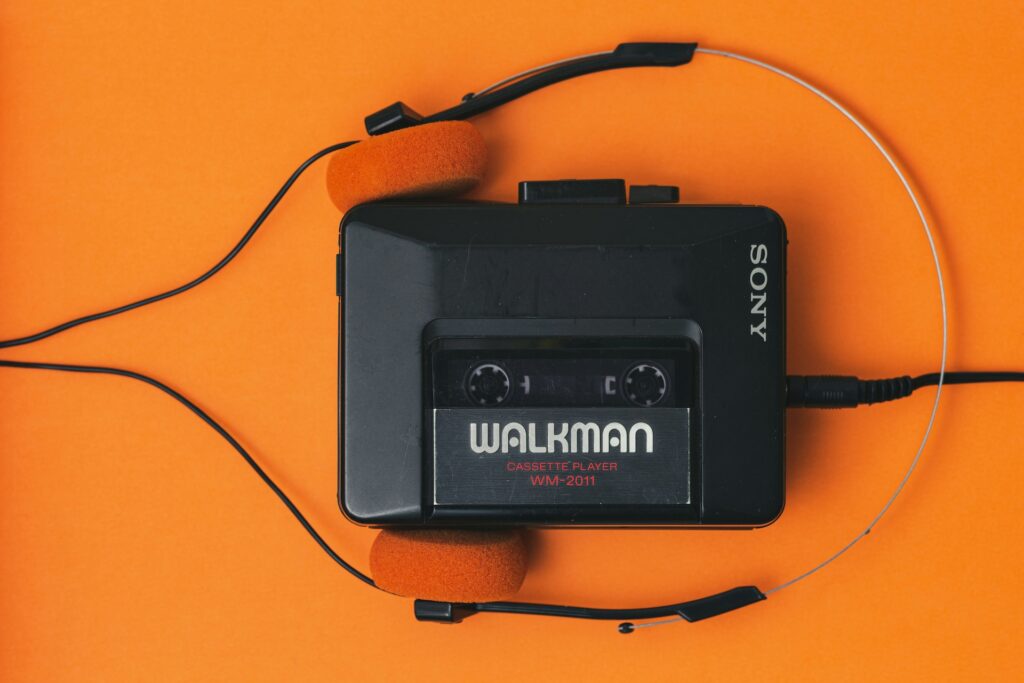
The so-called “hot technology” when I landed feet-first in the computer industry a lifetime ago, in 1979, was the Sony Walkman. Visualize yourself walking down the street with your Apple iPhone connected to wired earbuds. Just like today, right?
Not so fast. Today, those would be wireless AirPods—and one more thing. Back in 1979, that would have been a portable cassette player with lightweight headphones for your listening pleasure, not a wireless smartphone capable of managing your life.
Corporate-wise, Personal Computers were making a huge impact, but not from the big guys yet. Apple, Radio Shack, and Atari were the big brands. Of course, that would shift to IBM and Compaq within a few years.
Back then, technology was no different than buying a new TV. Nothing life-changing about it. Just new and improved features that made our lives a little better with each launch. The technology certainly did not control us; in fact, it was the opposite.
And completely the opposite of what we have today, some forty-seven years later. Technology has not made us better; it has only made us less attentive. Me included.
How Technology Convenience Became Dependence
It’s incredible that libraries are even still around. For research, we are only a Google search away. Why check out a book when you can have one tomorrow from Amazon? Or, for that matter, grab the audiobook version and listen while multitasking or driving.
Today, we live in the era of AI and ChatGPT. Even when I started drafting this blog, ChatGPT was offering to co-write it. Teachers have it harder than ever. Where does the student end, and where does the technology take over? For the record, I passed on the ChatGPT offer.
Granted, not everything is “technology for technology’s sake.” Artificial Intelligence has transformed medicine, space exploration, robotics, autonomous systems, and cybersecurity.
Examples worth knowing:
There needs to be a sense of separation here. Technological development must stay in the hands of experts until things are tested and ready for prime time.
Unfortunately, it’s a little late to put the toothpaste back in the tube. But it’s not too late to control what technology gets to the public while programs are properly vetted. It cannot be that we no longer know what is true and what is manufactured to be true.
Today’s technology is with us 24/7, whether it is in our hands or pockets. It’s called a smartphone, but it’s really a portable PC. Mine is, anyway, with Microsoft Word and Excel on it.
It’s the new American Express card, complete with Karl Malden’s famous line: “Don’t leave home without it.” And we don’t. It’s our crutch, our GPS, our encyclopedia. Face it, it’s our everything.
But is it too much?
When Technology Enhances Us, and When It Replaces Us
I know I would not have been as successful in my career with today’s technology at my fingertips. Go ahead, read that last sentence again. It’s accurate.
Rather than today’s technology making things better, it would have been my competition. I was doing Google-type product searches for customers for over a decade before Google was founded in 1998. That was my value-add: my ability to find impossible-to-find products.
What began as a way to build a career became my legacy. It became my reputation. Referrals were constant. I had new customers calling me almost daily, looking for products that no one else could locate.
That reputation is how two of the world’s top computer companies found me: General Electric and Hewlett-Packard. General Electric came through a Hewlett-Packard regional sales manager two territories away, whom I had never heard of. Hewlett-Packard came through a GE Capital sales rep who was looking for HP product. You can’t make this up.
And all because I had a reputation for finding things no one else could. There was nothing artificial about that intelligence.
Even after Google launched, customers continued to rely on me to find constrained inventory. That meant a great deal to me, especially because, yes, sometimes I was on Google searching for it.

As Technology Advances, Why Human Intelligence Still Matters
It would be easy to conclude that with AI, ChatGPT, and other technologies exploding into our lives, the human element is a lost art. But that’s not the case.
For those of us who were around in 1973, futuristic technology wasn’t much more than Dirty Harry’s .357 Magnum, “the most powerful handgun in the world.” RoboCop wouldn’t arrive for another fourteen years. By the time it did, Apple’s Steve Jobs had created the iPhone, and Netflix had started streaming.
More than ever, we need to keep pushing our buttons as well as the envelope. If we don’t get lazy, there will always be a need for Human Intelligence. Relying solely on Artificial Intelligence can leave you standing on the sidelines.
The one advantage Human Intelligence has is passion. Nothing artificial or robotic about that.
***
To learn about this entire journey, pick up a copy of 𝙄𝙩 𝙒𝙤𝙧𝙠𝙚𝙙 𝙁𝙤𝙧 𝙈𝙚: 𝙈𝙮 𝙇𝙞𝙛𝙚 𝙎𝙚𝙞𝙯𝙞𝙣𝙜 𝙊𝙥𝙥𝙤𝙧𝙩𝙪𝙣𝙞𝙩𝙮 𝙖𝙣𝙙 𝘽𝙪𝙞𝙡𝙙𝙞𝙣𝙜 𝙎𝙪𝙘𝙘𝙚𝙨𝙨 today! Also available now in audiobook format!
100% of all royalties go directly to the
Wounded Warrior Project!